Gram-Positive
Before:
Pick a colony and dilute in 10µl water OR Take 10µl glycerol stock culture from -80ºC freezer
Protocol:
- Add 5µl culture to a clean slide
- Gently pass over flame 3 times
- Add crystal violet solution (primary stain) to cover fixed sample.
- Incubate for 10 seconds (or up to 1 minute).
- Gently rise with water.
- Add gram's iodine solution (mordant) to cover stain.
- Wait for 10 seconds (or up to 1 minute).
- Quickly rinse slide with Acetone/Ethanol for 3 sec (too long may decolourise Gram positive cells).
- Wash immediately with water.
- Add safarin (secondary stain).
- Wait for 10 seconds (or up to 1 minute).
- Rinse gently with water
- Dry slide with filter paper and examine under oil immersion
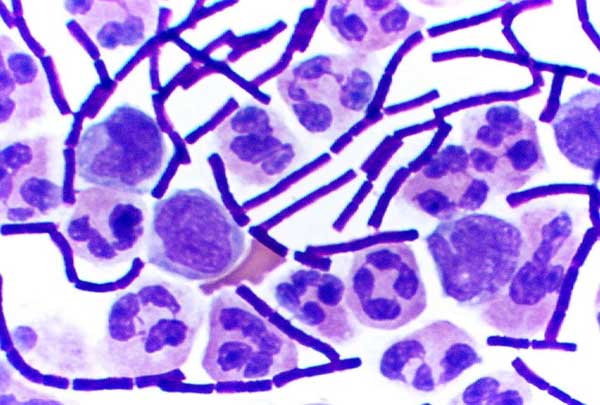
Example Gram-Positive:
Example Gram-Positive: Asource)

Example Gram-Negative:source)