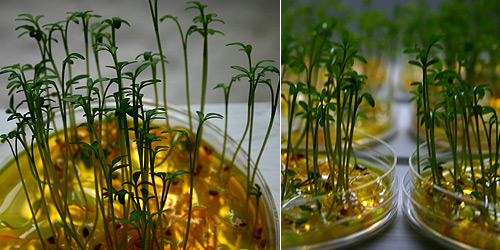
The fluorescent dye study involved using a fluorescent probe as a tool for visualising water conduction in plants and the outcomes of these evaluations pointed to its effectiveness as a visualisation tool, and further, the captivating effects of seeing fluorescent expressions. In this study, different concentrations (serial dilutions) of fluorescent dye (fluorescein) were placed in petri dishes where plants, Garden Cress (Lepidium sativum), were hydroponically grown from seeds. After plants reached maturity, they were placed under UV light to see whether the plants would fluoresce from the uptake of the dye. They did.
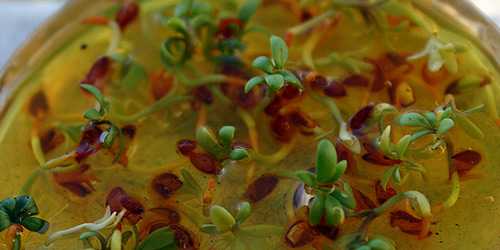
First attempt growing cress in fluorescent dye by window sill, 22 July - 2 August 2007.
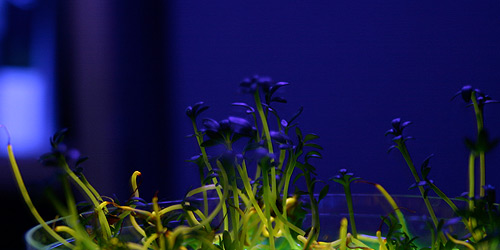
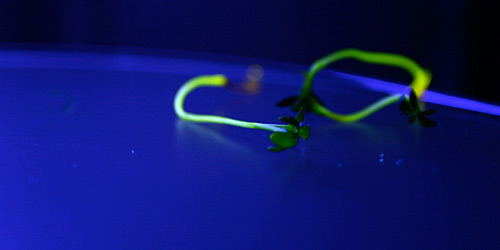
Growing cress seeds in fluorescent dye in controlled experiment using different concentrations of fluorescent dye, 24 January - 09 February 2008.
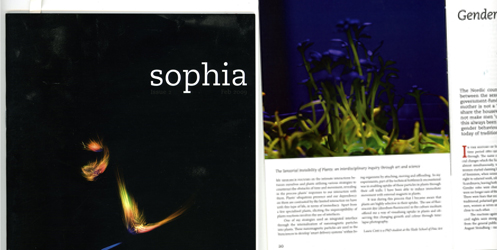
Sophia, Issue 2, February 2009, pp. 20.
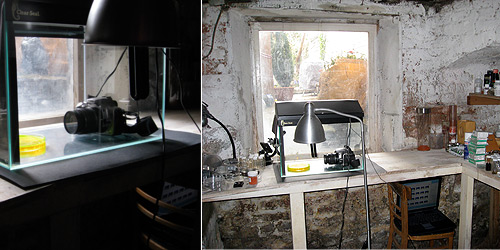
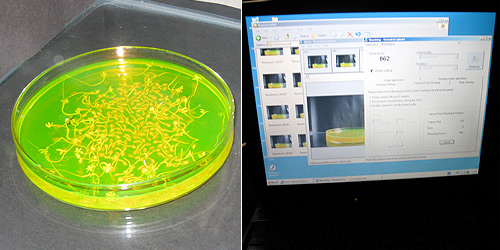
Time lapse photography used to document fluorescence uptake, 20 April - 08 May 2008.
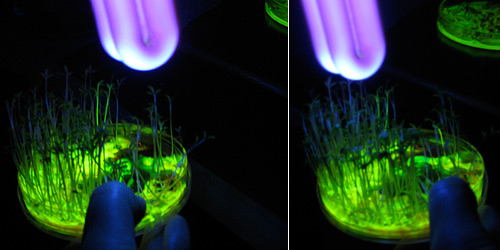
Few plants show successful uptake of fluorescent dye in another experiment, 27 April - 08 May 2008.
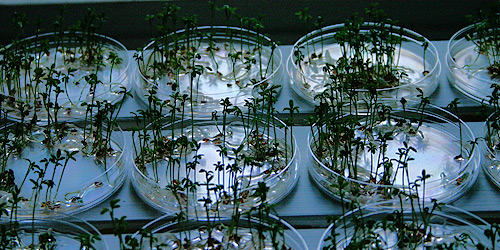
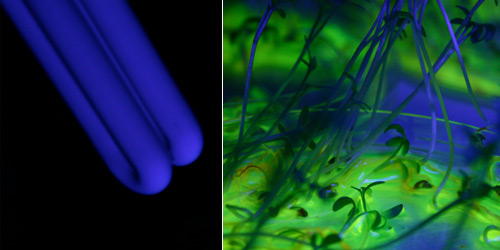
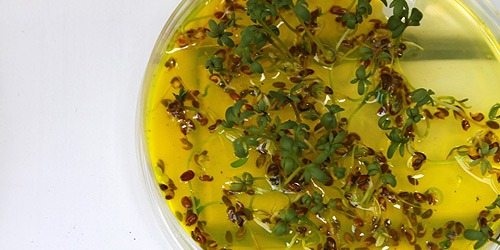
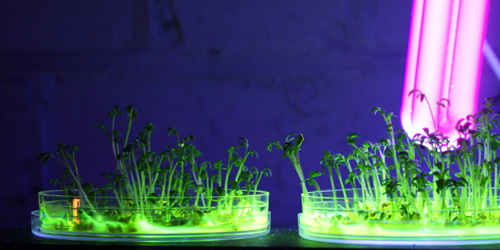
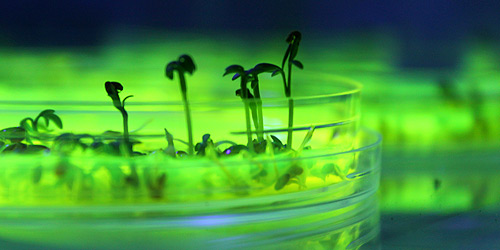
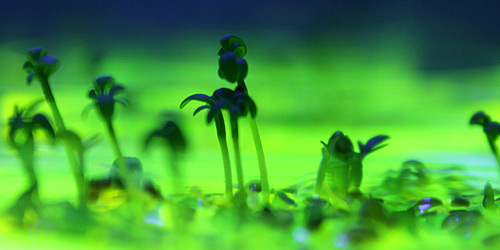
17 June - 1 July 2010


