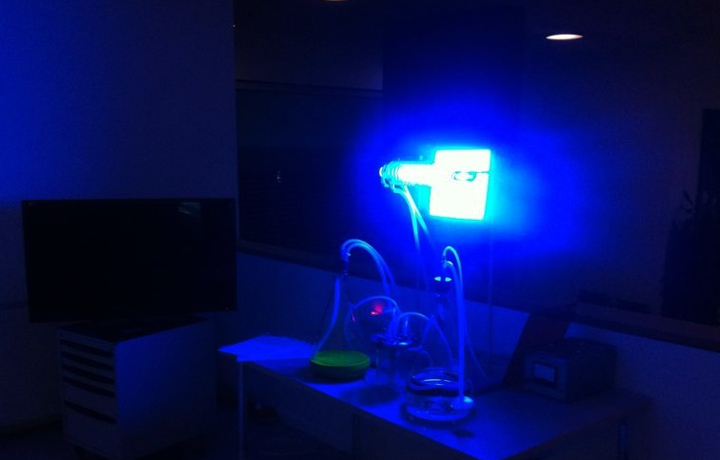
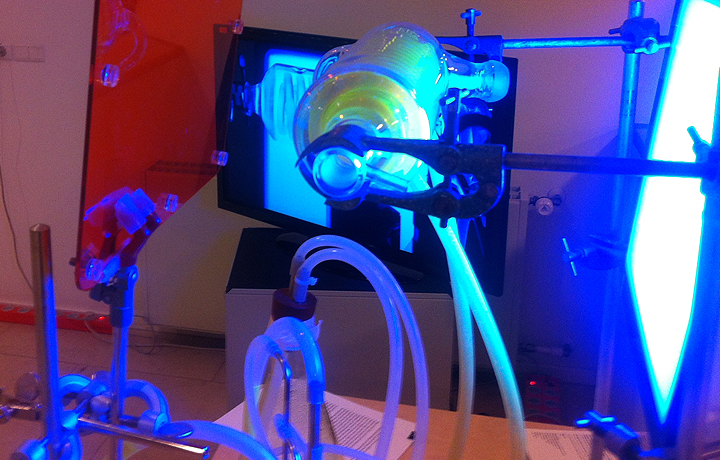
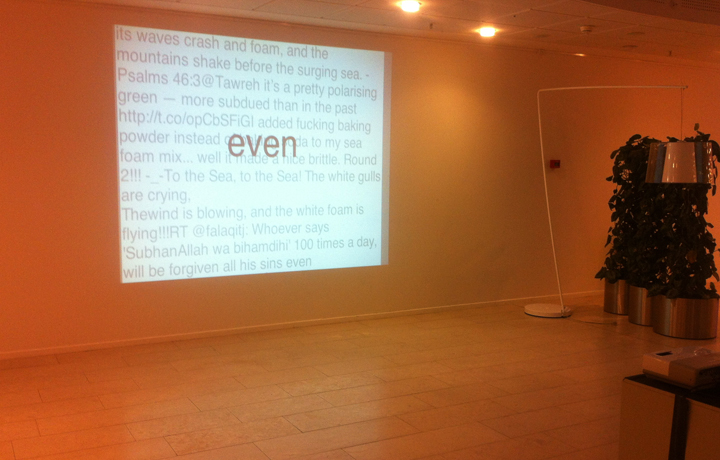
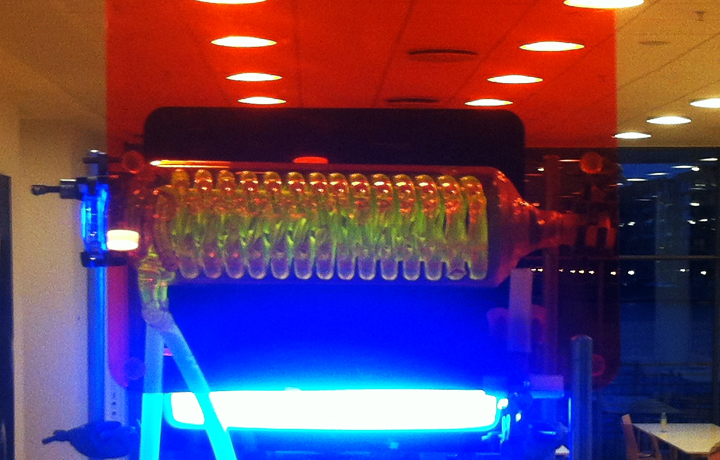
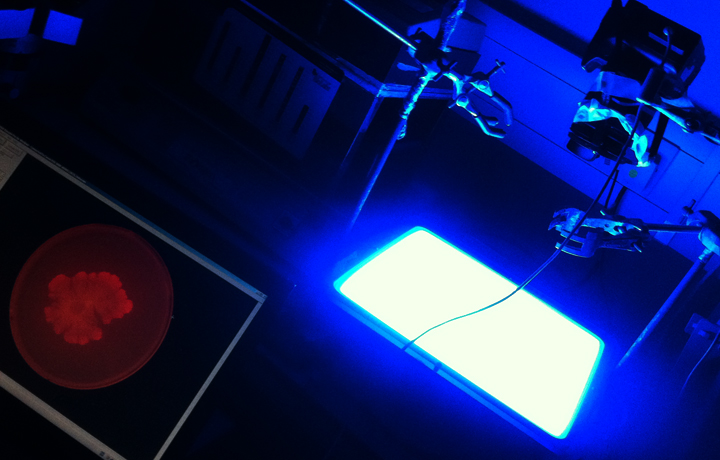
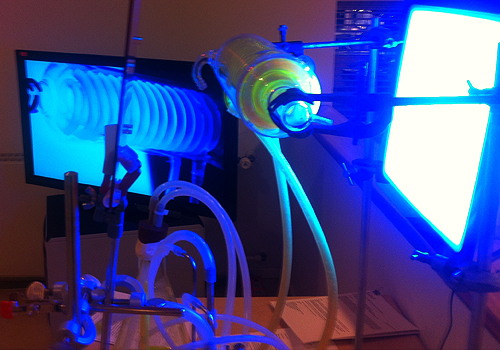
The annual Re-New Digital Arts Festival (2012) presented a selection of the artworks in digital and bio-cybernetic art with a particular focus on sound-based works. Howard Boland (C-LAB) was invited as an exhibiter and speaker in the accompanying IMAC 2012 Conference themed "Cybernetics revisited - towards a third order?". The intention was to show and discuss the work Stress-o-stat (2011) involving genetically modified bacteria producing light during stress. Unfortunately, a few weeks prior to the festival I was notified that the work was deemed illegal in Denmark (image above).
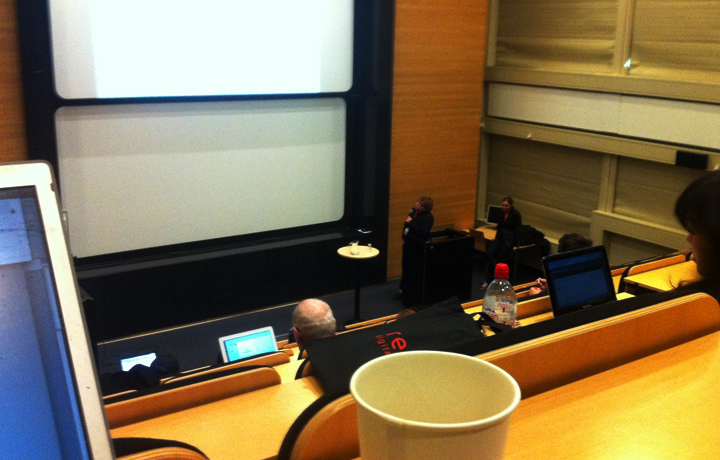
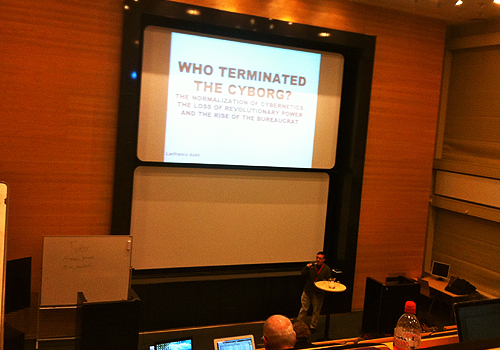
The conference included keynotes speakers Lanfranco Aceti (image above), Andrew Pickering, Paul Thomas and Roy Ascott. The keynotes was perhaps more a look at where the concept of cybernetics has arrived today – and if its revolutionary spirit once declared by Donna Haraway had come true. Aceti suggested by looking at prosthetics that far from being revolutionary it had become an integrated commodity and sold as a lifestyle. Pickering attempted to restore this image by looking at the many other modalities now being explored by artists. Thomas provided a workshop to address how we might begin to build an art-science curriculum while Ascott who fashionably arrived on the last day and managed to stay for his own talk gave an historical insight into his pioneering work as an early innovator in cybernetics and the sort of vernacular we may be looking at operating with.
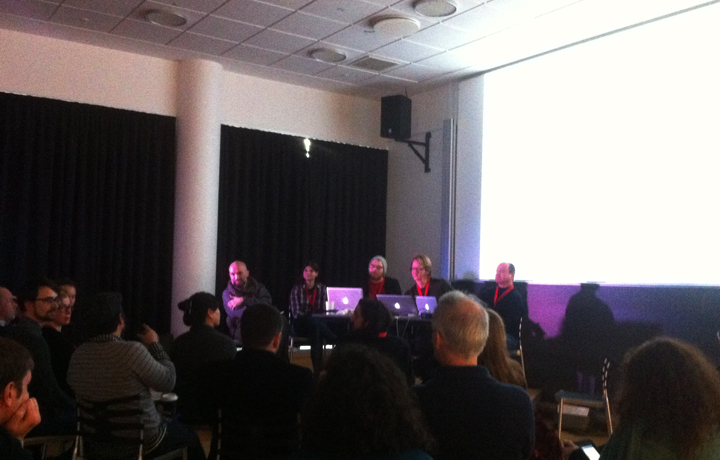
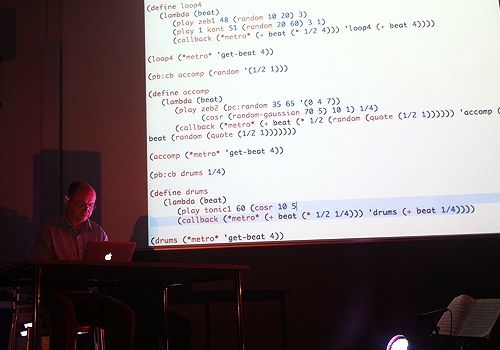
The re-mix sessions operating after each day’s conference provided a more informal look at works and art production. For instance, Andrew Brown (image above) used Live Coding to programme and generate music. Using Impromtu with schema (LISP derivative) the compiler constantly runs through the code to check for updates allowing the coder to make amends and produce 'live music' from 'live code'.
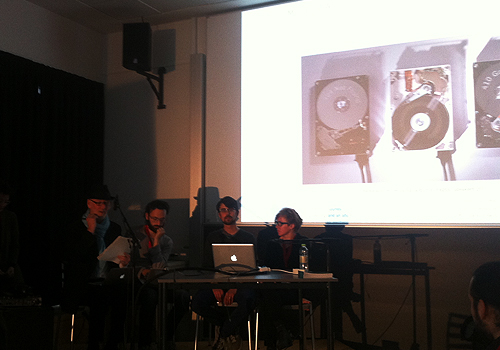
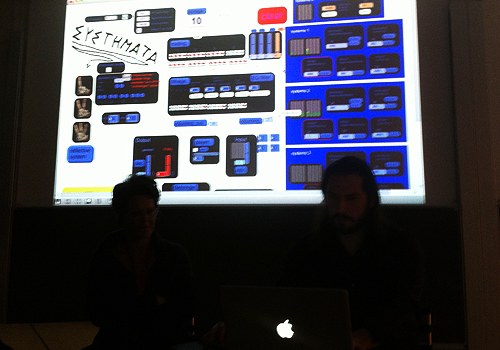
Berlin based Marcelina Wellmer (image above) discussed the artistic processes as behind their work Error 404 502 410 a generative sound installation where harddrives surfaces etched with these respective codes cause constantly failure and attempts to restart. Wellmer (and her husband Gosta) both visually and sonically attempt to draw out the dissonance often experienced with computers as a cultural machine when for searching for information. During the re-mix session she contemplated how audience familiarity with harddisk often determined the work’s reading.
Andreas Busk and Lasse Thorning's work Soulmates (video above) was appropriately set up in complete darkness in the basement. Audience used rear cycle lights to navigate themselves into the space. The sonic work combines recordings of a poetry written about a man who finds resonance with the distinct and lonely signal of the enigmatic Russian short-wave radio station UVB-76 broadcasted 1982 (for reasons unknown - and heard live in the space).
Also exhibiting and speaking in the remix session, Anders Monrad & Simon Nielsen, showed a videogame (above) with adaptive music parts. Ervax for 2 Earwax for 2 was a mixture of retro, arcade videogameaesthetics and serial/60′s avant-garde music aesthetics: Nancarrow meets Space Invader.
Given the more sonic theme to the festival each night included a performance. Paris-based Phivos-Angelos Kollias performed and spoke about this work Ephemeron involving the producing to a sonic organism using feedback loops from the audience. The work attempts to avoid the use of programmatic randomness in order for these to emerge from the audience and the space. His set-up places the audience in the centre of multiple speakers allowing sound to be experienced 360 degrees. Initiated by the audience clapping, it builds into a composition of sounds that Kollias describes as the emergence of an organism.
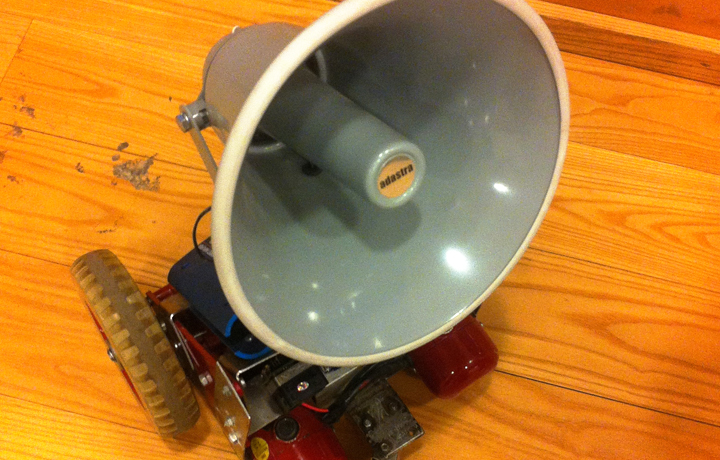
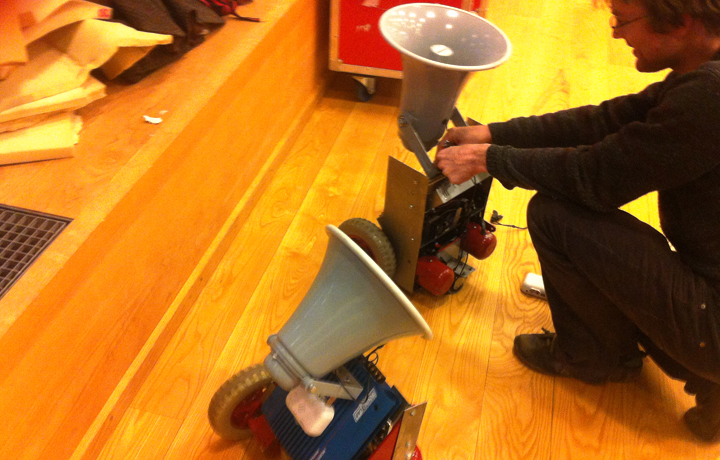
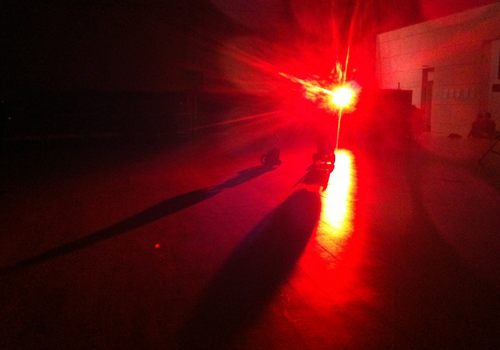
Another performance was Matteo Marangoni - Echo Moiré: Sonic Vehicles Echo Moiré that involves two mobile directional loudspeakers emitting sharp pulses to scan the room and provide an image of the room by means of echo. The audience is advised to close their eyes during the performance. Like other works in the festival removing the visual and focusing on the acoustical is intended to open an alternative use of imagination.
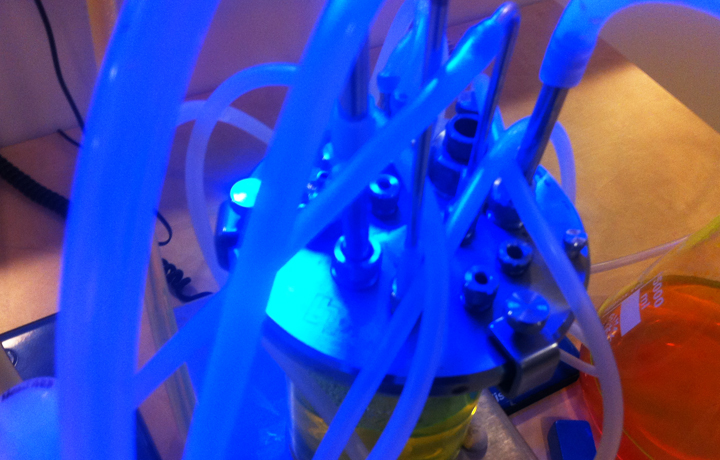
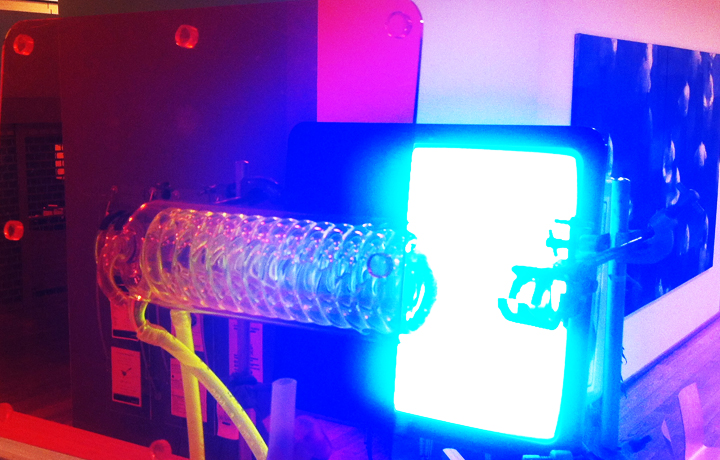
Finally, a few words about my own work Stress-o-stat that could not be shown in the festival due to legalities governing genetically modified organisms (GMO). Instead, with the help of the bioscience department, a dummy set-up of the installation and a video documentation was shown. To at least provide an element of the visual experience, a fluorescent liquid was used. However – without the living bacteria producing this light – neither the living nor the artwork was present.