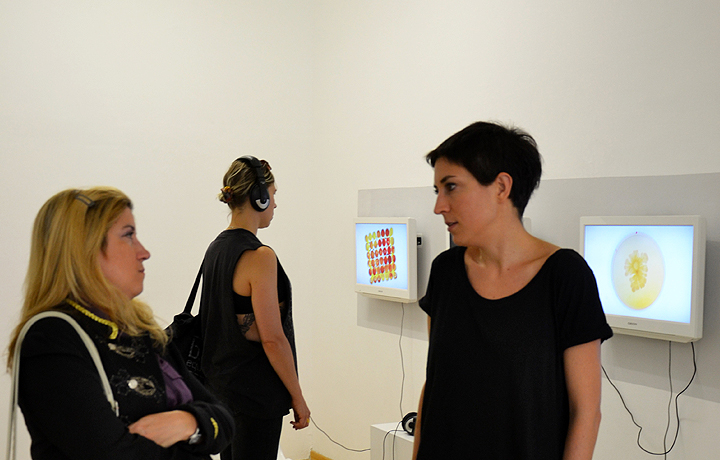
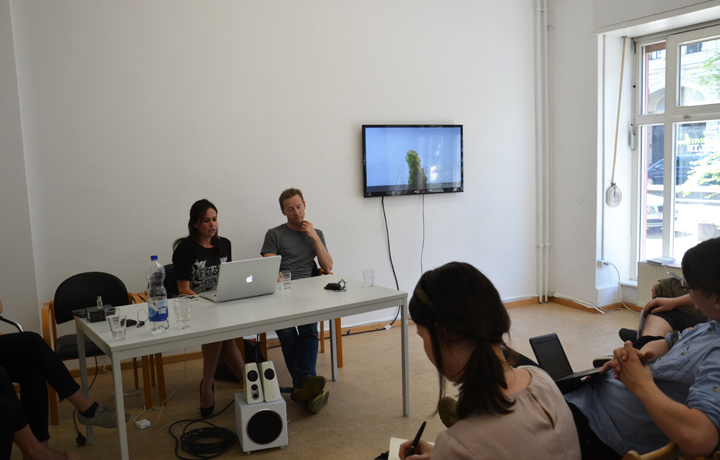
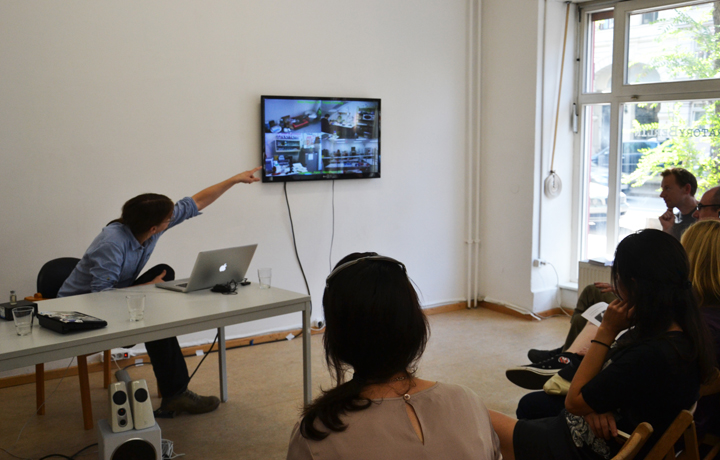
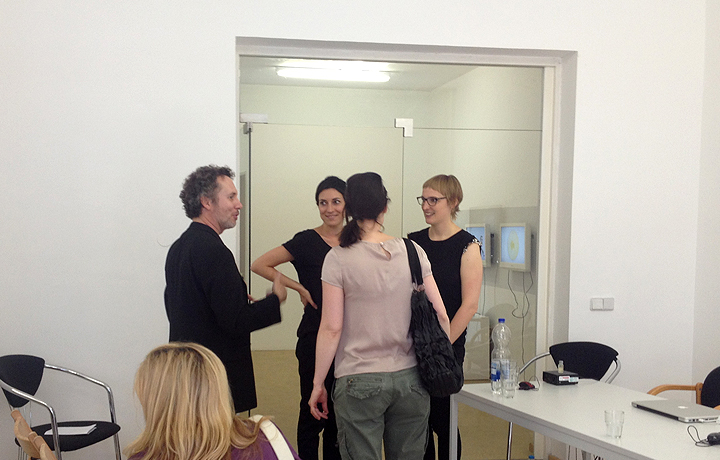
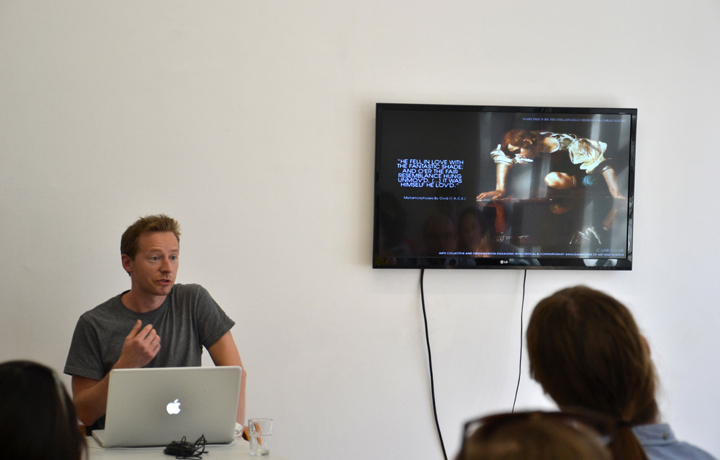
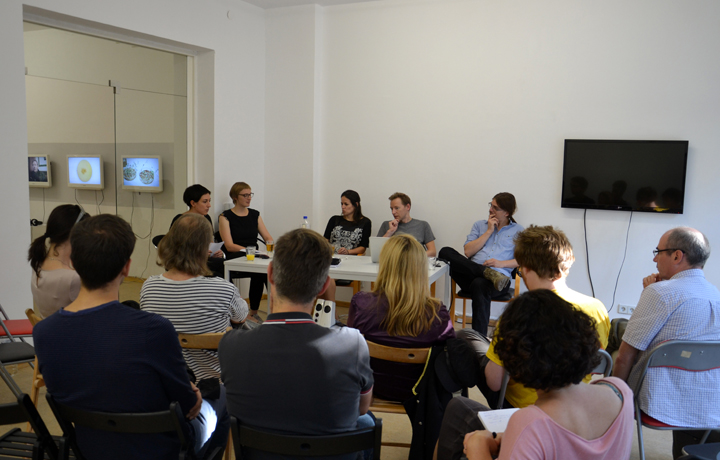
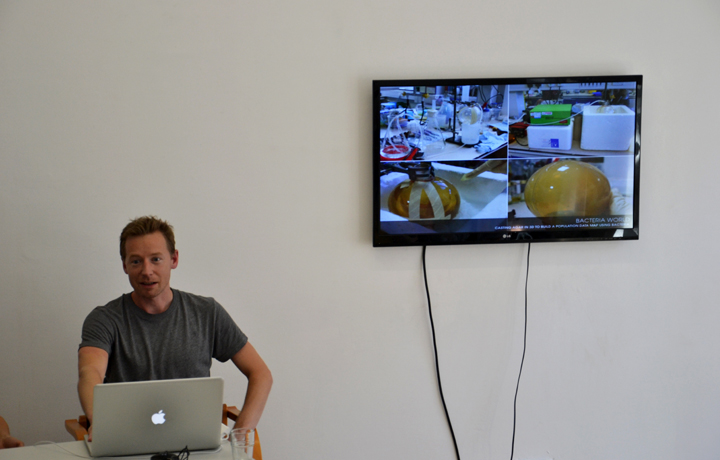
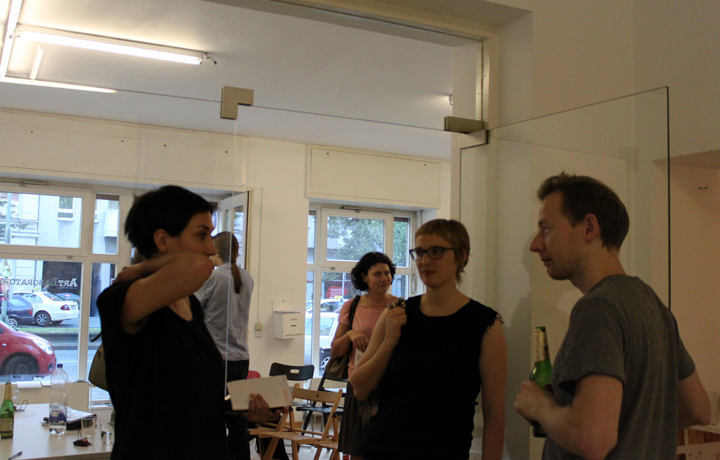
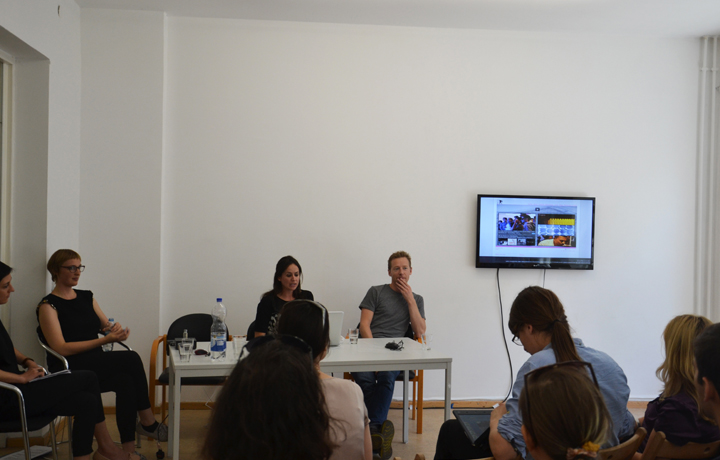
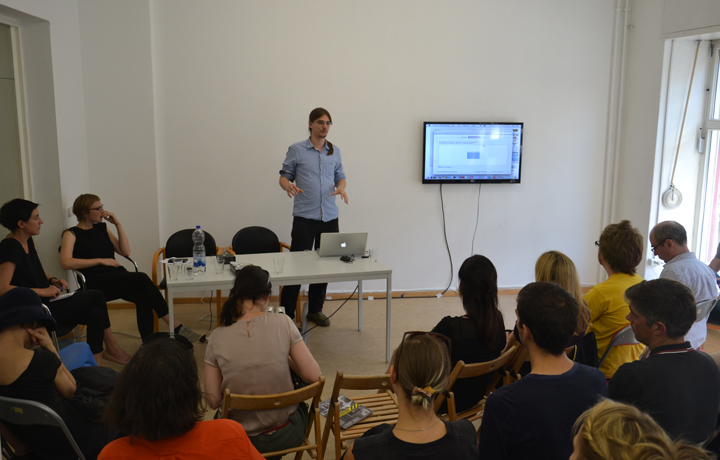
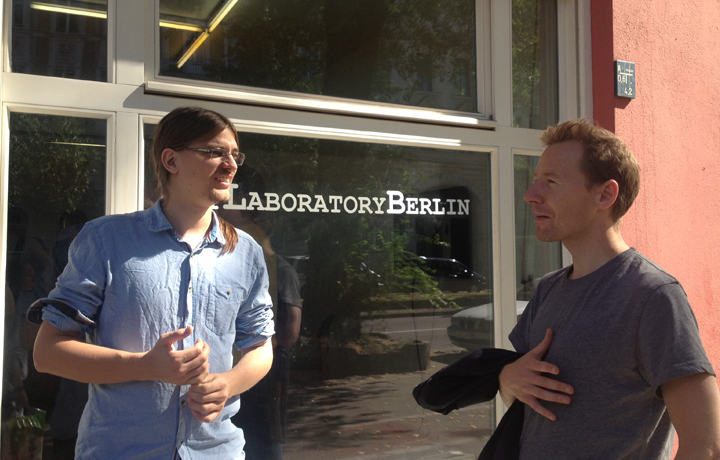
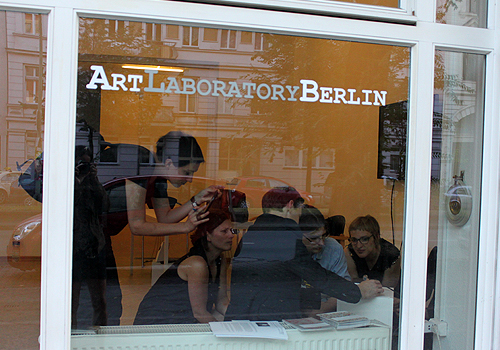
C-LAB was invited by curators Desiree Förster and Daniela Silvestrin to give a talk on our recent research and art practice in bio art and synthetic biology at Art Laboratory Berlin - an interdisciplinary art space run by Christian de Lutz and Regine Rapp hosting a variety of exhibitions and events in emerging art practices. In spite of it being a hot day, the event brought in a great crowd that made for interesting discussions.
Opening the event were the directors of Art Laboratory Berlin, Regine and Christian, who gave an introduction to the space, their activities, interest in the art-science genre and the importance of looking at art-science engagements.
Desiree introduced C-LAB and Berlin-based biohacker Rüdiger Trojok and highlighted the intricacies involved with artists working with scientific methods and how these sort of practices open new, or alternative, contexts and discourses. Pointing to recent biotechnological progress, such as novel life forms, she elaborated on how these interdisciplinary research areas offer scopes that can extend current discourses around our understanding of nature and life.
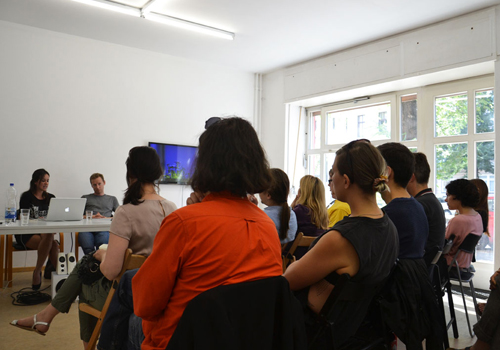
Laura Cinti introduced C-LAB's biological art practices and the scope of our research areas. As C-LAB’s focus has been on research, this has led us into new avenues of both art and science that have resulted in exhibiting the first living synthetic biology artworks in India and more recently, UK’s first ever public art exhibition featuring living genetically modified organisms developed from Howard Boland's lab-based practice.
Since plants, for the most part, do not behave in ways we recognise as sensorial, Laura’s research specifically probes scientific possibilities of having living plants respond directly and visibly to touch.
Through Laura’s research with plants and leading into Howard’s in synthetic biology, their shared critique deal with how artists working in the field of bio art have been effective at producing speculative and dramatic living displays focusing on aesthetics and ethics. However, there is a need for artists to take into account biological meaning and knowledge processes which have so far been overshadowed by cultural ideas and themes that play little, if no role, on a biological or biochemical level.
Howard Boland spoke about his research combining innovative approaches in the arts with the bioscience to develop and display living synthetic biology artworks. Over the last several years, his daily practice has been immersed in a laboratory context using evidence-based approaches. His living works draw out connections between inner biological processes and outer visual characteristic. In doing so his works expand on modalities by tapping into interactive cellular processes on a genetic level through synthetic biology and allow these to be visualised.
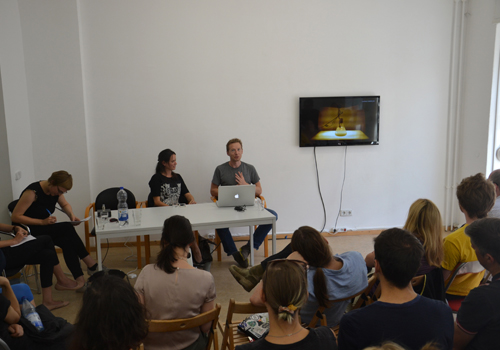
For example, in Stress-o-stat he developed a genetic construct to visually capture stress in bacteria as light and the work partakes in machine-life ambiguities imposed by the field of synthetic biology by employing a machine to control the genetic program mediated through the living. In another work, Banana bacteria, he uses a genetic construct developed by a team at MIT to allow audience to experience a strange and confusing sensation of bacteria smelling like banana. He has also explored non-modified system such as sludge bacteria from sewage capable of degrading textile dye as a way of generating disappearing or transient images. Other works include exploring magnetic and interactive potentials in bacteria and developing constructs that enable light sensing in E.coli. He also discussed C-LAB's latest project, LIVING MIRROR, a bacterial imaging system developed in collaboration with FOM Institute AMOLF.
Rüdiger Trojok introduced the do-it-yourself biohacking scene and emerging field of citizen science characterised by tinkering of biological material and sharing of resources and ideals. He has been involved with iGEM teams and is a DIY Biologist at Hackteria - an online web-based resource for developing open source hard/software and DIY biology. Several such biohacking organisations/groups, like Hackteria, exist worldwide such as BioCurious in the US and bio-hackerspace La Paillasse in France.
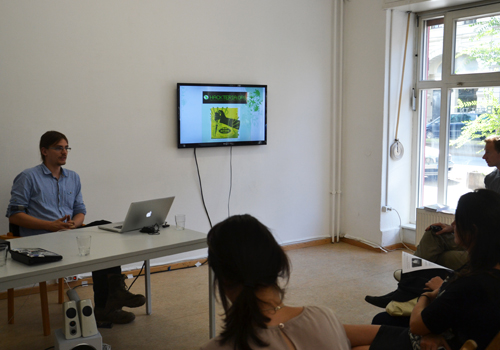
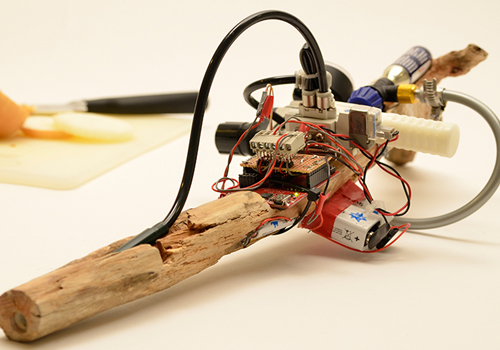
Rüdiger’s DIY biology projects include the open-source DIY Gene Gun - a significantly cheaper version of the €15000 device used to shoot DNA particles into cells - it uses gas pressure from a bike pump, valves found in trash in Hackerspace Labitat and a forest branch as scaffold.
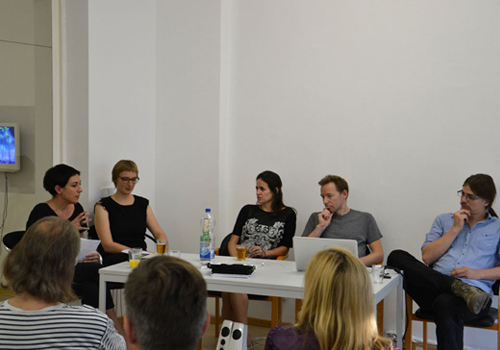
The Q&A began with a question from Daniela on ethical dilemma facing artists using living material - even on the level of bacteria - for the production of novel life forms. Pointing to the philosopher Slavoj Žižek who claimed that directing intervention makes us not only responsible but also shifts the ethical debate from discussions around categories (e.g. animal versus cell) to an epistemological divide between object and subject (and the technological imprerative that ask if we 'should' do something just because we 'can'). How then do we think of the ethics involved in using and disposing of these organisms?
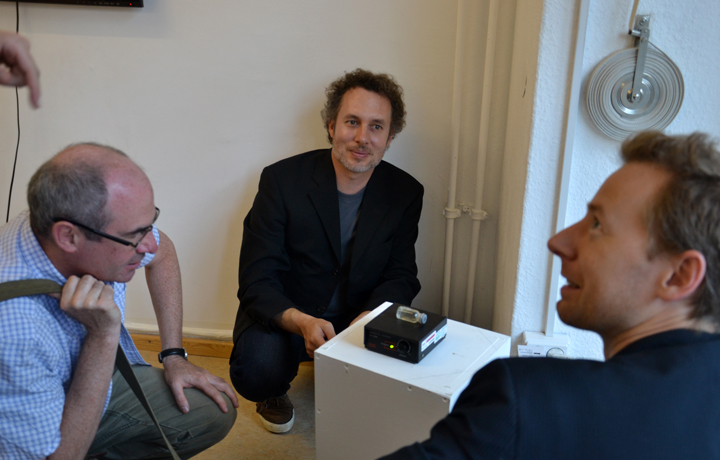
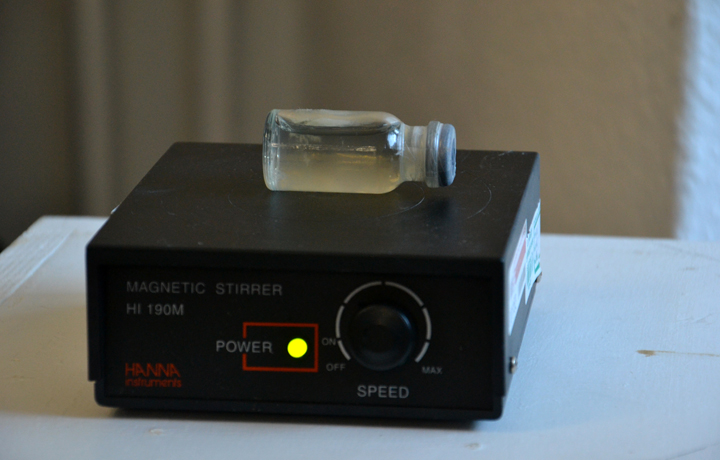
After the discussions, we demo'ed the unique shimmering effect of magnetotactic bacteria we are worked on the LIVING MIRROR. Specific to these bacteria are their ability to move in response to the Earth’s magnetic fields. They produce a stunning shimmering effect in real-time that is visible to the naked eye. By changing the magnetic field, we were seeing bacteria rapidly switching direction a synchronic rotation causing light to scatter producing a visible shimmer.
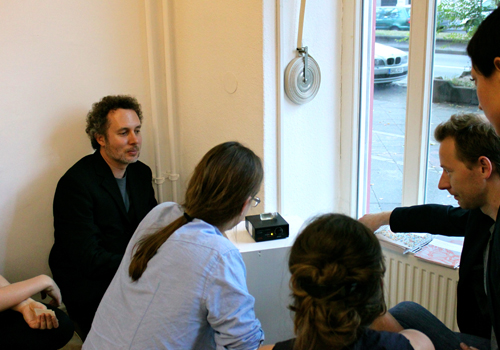
In LIVING MIRROR, multiple pulsating waves of bacteria are made to form a pixelated image using electromagnetic coils that shift magnetic fields across surface areas. By taking pixel values from darker and lighter areas in captured images, LIVING MIRROR programmatically attempts to harmonise hundreds of light pulses to re-represent the image inside a liquid culture.
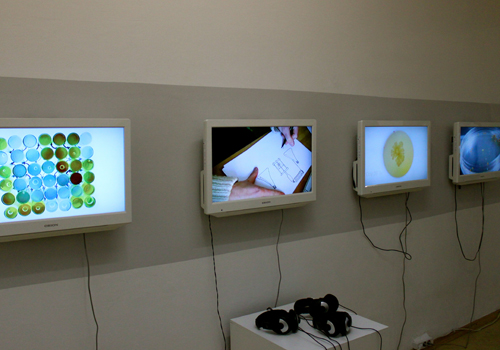
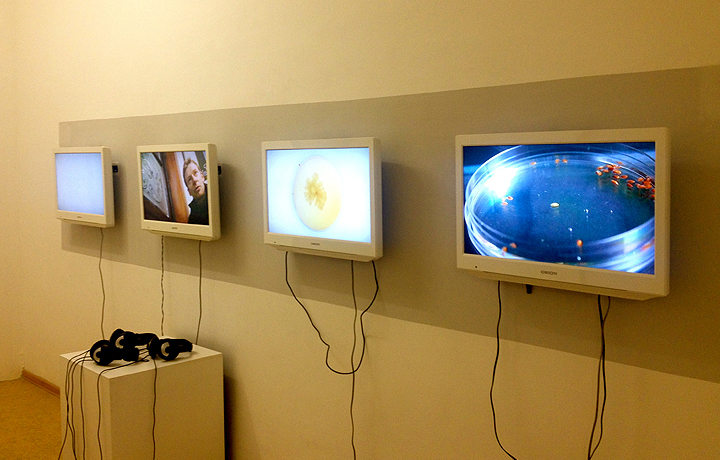
Videos of Transient Images, Stress-o-stat, katEred and Nanomagnetic Plants were screened.
Photos: Art Laboratory Berlin and C-LAB