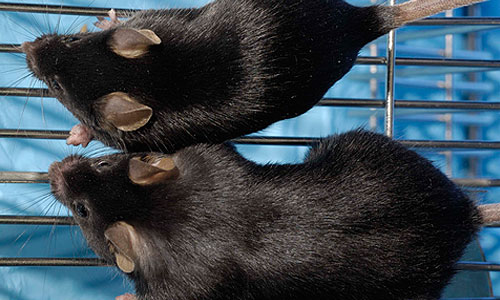
Building on his earlier research, Dr Se-Jin Lee, has created genetically engineered mice with four times the muscle mass showing significantly larger pectorals, triceps and quadriceps than its normal counterparts.

The genetic differences these mutant mice exhibited included the lack of production of the myostatin protein and the over production of the follistatin protein. Myostatin is a transforming growth factor-ß family member that normally acts to limit skeletal muscle growth and prevents them from growing too large. The follistatin protein does the opposite and is shown to act as an antagonist to myostatin. 
Lee initially discovered that follistatin was able to block myostatin activity in muscle cells grown in lab conditions. Given to mice, the same effect of bulking up was evident, just like his previous research where he turned off the myosin genes in mice. Engineering a mouse that both lacked myostatin and produced extra follisatin resulted (unexpectedly) in an average increase of 117% muscle fibre size and 73% increase in total muscle fibres.
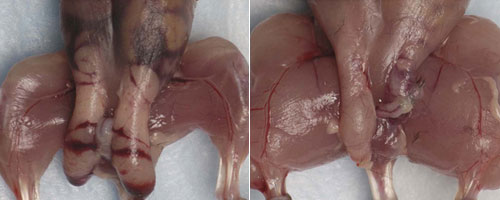
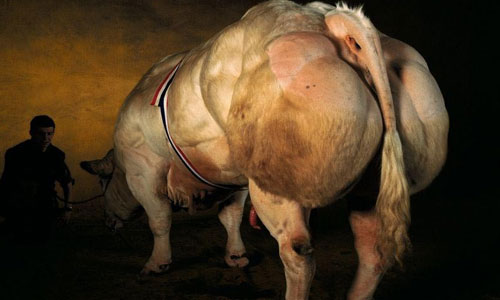
Lee first showed that the absence of myostatin resulted in oversized muscles. These genes were discovered in 1997. He also found that the double muscle cattle breeds (Belgian Blue) have defective myostatin genes. In humans, there have been a couple of cases where mutations in myosatin-producing genes resulted in increase muscle production…the hulk-like effect.
There is considerable interest in developing applications able to stop myostatin activity for both agricultural and human therapeutic applications.